How to Uncover the Secret Birth of Supermassive Black Holes: A Step-by-Step Guide
Introduction
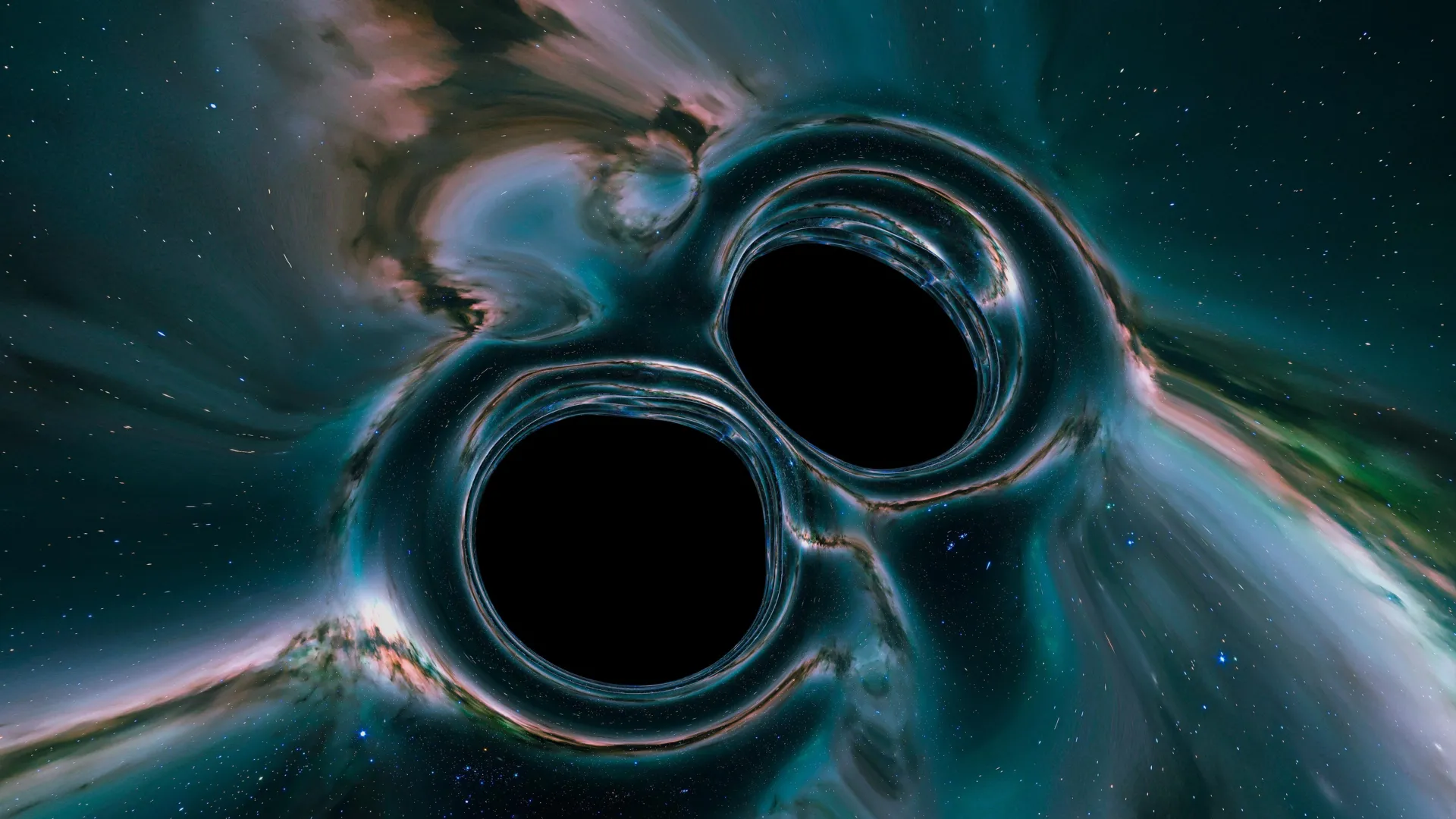
Black holes are among the most mysterious objects in the cosmos, and the biggest ones—supermassive black holes—have long puzzled astronomers. Recent research suggests they may not be born gigantic but instead form through a violent chain of mergers within dense star clusters. This cosmic recycling process creates a distinct class of rapidly spinning black holes. In this guide, we'll walk through the scientific method used to uncover this phenomenon, from detecting gravitational waves to interpreting the data. Whether you're a curious learner or an aspiring astrophysicist, these steps will help you understand how scientists trace the origins of the universe's largest black holes.
What You Need
- Gravitational-wave observatories (e.g., LIGO, Virgo, KAGRA) – to detect ripples in spacetime from black hole mergers.
- Data from dozens of black hole collisions – specifically, the catalog of gravitational-wave events (e.g., GWTC-3).
- Computer models of star clusters – to simulate dense environments like globular clusters or nuclear star clusters.
- Statistical analysis tools – to compare observed spin and mass distributions with theoretical predictions.
- Knowledge of black hole formation pathways – such as core-collapse supernovae vs. hierarchical mergers.
Step-by-Step Guide
Step 1: Collect Gravitational-Wave Data from Multiple Mergers
The journey begins with observatories like LIGO and Virgo, which detect gravitational waves—tiny distortions in spacetime caused by accelerating masses. To study the heaviest black holes, scientists gather data from dozens of collision events. Each event records the masses and spins of the two black holes that merged. For this guide, you'll need access to a public catalog (e.g., the Gravitational-Wave Transient Catalog). Focus on events where the final black hole mass exceeds roughly 50 solar masses, as these are prime candidates for recycled objects.
Step 2: Analyze the Spin Distribution of Merging Black Holes
Once you have the data, examine the spin parameters of the black holes just before they merge. Spins are measured as a dimensionless value between 0 (non-spinning) and 1 (maximally spinning). In the dataset, look for a population of black holes with high spins (typically above 0.5). This is a key clue. Ordinary black holes from dying stars tend to have low spins (below 0.3), whereas those from repeated mergers often spin faster due to angular momentum accumulation. Plot a histogram of spins—if you see a bump at high values, you're onto something.
Step 3: Compare with Theoretical Models of Star Cluster Dynamics
Now build or use existing computer simulations of dense star clusters. In these clusters (e.g., globular clusters), black holes sink to the center and form a dense sub-cluster. Model the hierarchical merger process: two black holes merge, the product merges again, and so on. Each merger typically adds spin (if the orbits are aligned). Simulate thousands of such chains to generate a predicted spin distribution. Then compare this with your observed spin data. The match—especially the presence of a high-spin peak—indicates that many massive black holes are indeed cosmic recyclers.
Step 4: Check for a Distinct Mass Gap
Another hallmark of recycled black holes is a mass gap. Ordinary black holes from stars rarely exceed about 20–40 solar masses. But in star clusters, repeated mergers can produce black holes of 50–100 solar masses or more. Plot the mass distribution of your sample. If you see a population above 50 solar masses that cannot be explained by single-star collapse, that's a second piece of evidence. Together with the spin data, this strongly supports the merger chain origin.
Step 5: Eliminate Alternative Explanations
To confirm the result, rule out other formation channels. For example, black holes could also grow by accreting gas. But gas accretion tends to produce random spin tilts, not the uniform high spins seen in the data. Compare your observations with predictions from other models (e.g., isolated binary evolution). Use Bayesian statistical methods to see which model fits best. If the star-cluster merger model has a higher Bayesian evidence, you've found the likely answer.
Tips for Success
- Use the latest public data: The most recent gravitational-wave catalog (GWTC-3 from LIGO-Virgo-KAGRA) includes over 90 events. Download it from the official Gravitational Wave Open Science Center.
- Simulate with realistic cluster parameters: Vary the cluster size, density, and metallicity. Denser clusters tend to produce more mergers.
- Watch for selection biases: LIGO is more sensitive to massive black holes, so the observed sample may overrepresent them. Correct for this using population models.
- Collaborate with experts: This work usually involves a team of astrophysicists, data analysts, and numerical relativists. Don't go it alone.
- Read key papers: The 2023 study by Rodriguez et al. in Physical Review Letters is a great starting point. Also check out the LIGO-Virgo collaboration's papers on hierarchical mergers.
By following these steps, you'll be able to independently verify that the universe's biggest black holes are indeed forged in violent mergers—a process that transforms them into rapidly spinning cosmic recyclers. This understanding reshapes our picture of galaxy evolution and the role of star clusters as black hole factories.