How Freezing and Thawing May Have Jumpstarted Life on Early Earth
New research suggests that the chilly cycles of freezing and thawing on early Earth could have been a key driver for the emergence of life. Scientists found that simple lipid bubbles—primitive cell-like structures—behaved differently based on their membrane composition. When these bubbles froze and thawed, some merged into larger compartments, efficiently capturing DNA and mixing essential molecules. This process might have created the chemical complexity needed for life to begin. Below, we explore the fascinating details and implications of these experiments.
What did scientists discover about freezing and thawing on early Earth?
Researchers uncovered that the repeated cycles of freezing and thawing on the primordial Earth may have played a critical role in the origin of life. In laboratory experiments, they observed that tiny lipid bubbles—similar to the membranes of modern cells—underwent dramatic transformations when subjected to temperature fluctuations. The freezing process caused water to expand, which squeezed and deformed the bubbles. Upon thawing, some bubbles fused together, creating larger compartments. This fusion was not random; it depended on the specific mix of lipids in the membrane. These larger compartments were better at capturing and holding onto DNA molecules from the surrounding environment. The study suggests that such natural freeze-thaw cycles could have concentrated and mixed key chemical ingredients, setting the stage for the complex chemistry that eventually led to life.
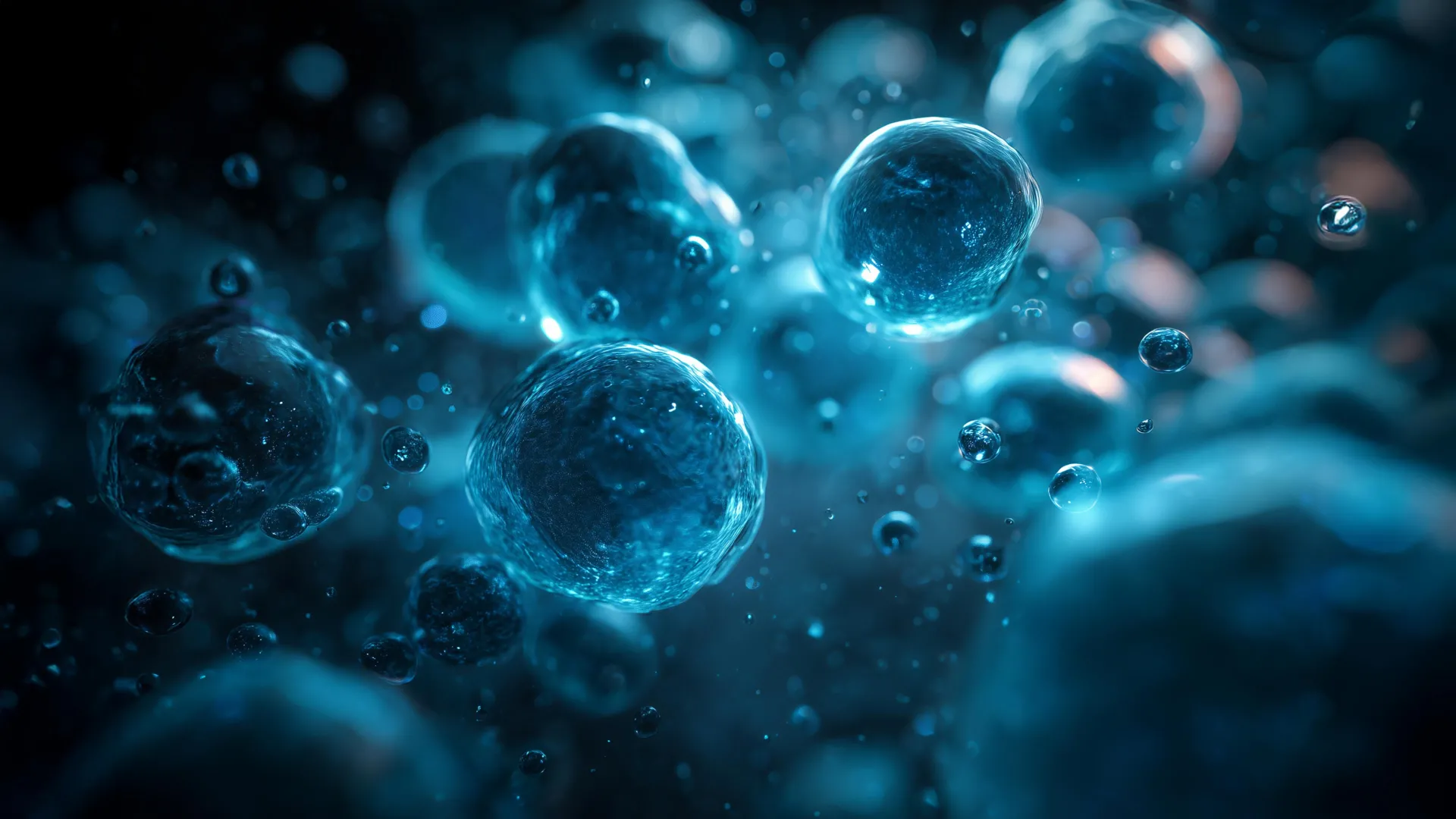
How did tiny lipid bubbles behave under different membrane compositions?
The behavior of lipid bubbles varied significantly depending on the composition of their membranes. In the experiments, scientists created bubbles with different ratios of fatty acids and other lipids. Some membranes were more rigid, while others were more fluid. When these bubbles were subjected to freeze-thaw cycles, the more fluid membranes tended to fuse together readily, forming larger structures. In contrast, bubbles with stiffer membranes often remained separate or even fragmented. The key was the balance: membranes with a certain lipid composition were particularly prone to fusion. This suggests that early Earth's chemical diversity could have led to a variety of bubble types, and only those with the right membrane properties would have been able to merge and grow. Those that fused could then capture more DNA and other molecules, giving them a potential advantage in the race toward life.
What happened when lipid bubbles fused?
When lipid bubbles fused during thawing, they created larger compartments that could hold more internal volume. This fusion process is critical because it allowed the mixing of previously separate contents. For example, if one bubble contained a certain chemical and another contained a different molecule, fusion brought them together, enabling chemical reactions that wouldn't have occurred otherwise. Moreover, the enlarged bubbles were more efficient at capturing DNA from the surrounding solution. The newly formed larger vesicles had a bigger surface area and could engulf DNA strands more easily. Once inside, the DNA was protected from the environment and could interact with other trapped molecules. This mixing and concentration of genetic material with other building blocks is considered a crucial step toward the development of self-replicating systems—a hallmark of life.
Why is DNA capture important for the origin of life?
DNA is the molecule that carries genetic information in all known life. For life to emerge, some form of information storage and replication was necessary. The experiments showed that freeze-thaw cycles could help primitive cells capture DNA from their surroundings. Once inside a lipid bubble, the DNA was shielded from degradation and could potentially be copied or used as a template. This is important because it suggests a plausible mechanism for how early protocells could have acquired genetic material without complex machinery. The capture of DNA by lipid bubbles would have concentrated genetic information alongside other molecules like amino acids or sugars, creating a localized environment conducive to prebiotic chemistry. Over time, such encapsulated systems could have evolved to replicate their DNA and divide, leading to the first living organisms.
How do these experiments change our understanding of life's beginnings?
These findings offer a new perspective on the origins of life by highlighting a simple, natural process that could have driven complexity. Previously, many theories focused on warm ponds or hydrothermal vents as cradles of life. This study shows that cold environments with freeze-thaw cycles might have been equally, if not more, important. The experiments demonstrate that the physical process of freezing and thawing alone can create larger structures, mix chemicals, and capture DNA—all without the need for complex enzymes. This suggests that life's emergence may have been more likely in environments with daily or seasonal temperature swings, such as tidal pools or icy landscapes. The work also reinforces the idea that the lipid membrane was not just a passive container but an active participant in early evolution.
What role did environmental conditions like temperature play?
Temperature fluctuations, especially freezing and thawing, were the driving force behind the observed changes in lipid bubbles. On early Earth, the climate likely experienced significant temperature variations due to the sun's lower luminosity and different atmospheric composition. Freezing would cause water to crystallize, forcing dissolved molecules and bubbles into smaller spaces. This concentration effect increased the likelihood of bubble-bubble contact and fusion. Thawing then allowed the merged bubbles to expand and stabilize. The specific temperature range was crucial: if it never froze, bubbles wouldn't merge; if it stayed frozen, reactions would stop. The cycle needed to be repeated many times. These conditions could have existed in shallow ponds or coastal regions that froze at night and thawed during the day, or in seasonal climates. The study suggests that such dynamic environments were ideal for promoting the chemical evolution necessary for life.
Could this process have occurred on other planets?
The idea that freeze-thaw cycles could help life get started isn't limited to Earth. Many other worlds in our solar system and beyond experience temperature fluctuations and have water ice. For example, Mars has polar ice caps and seasonal freeze-thaw cycles. Jupiter's moon Europa has a frozen crust with a liquid ocean underneath, and Saturn's moon Enceladus has geysers that spray water into space. On these bodies, similar processes could occur if lipid-like molecules are present. While we don't yet know if such molecules exist elsewhere, the experiments show that if they do, freezing and thawing could create cell-like structures and concentrate DNA. This expands the habitable zone concept to include not just liquid water but also environments with cyclic freezing. Future missions to icy moons could look for signs of such prebiotic activity.
What are the next steps for this research?
Scientists plan to build on these findings by exploring more complex scenarios. One direction is to test different lipid mixtures that better mimic early Earth's chemistry, including fatty acids that might have been produced by volcanic activity or meteorites. Another is to introduce other key molecules like RNA or simple peptides alongside DNA to see if the freeze-thaw process can promote their interaction and even primitive catalysis. Researchers also want to study the stability of the captured DNA over many cycles and whether the larger bubbles can divide or grow further. Ultimately, the goal is to create a laboratory model of a protocell that can undergo some form of evolution. By understanding the physical and chemical constraints, we can better pinpoint where and how life might have emerged on Earth—and where to look for it elsewhere.