The Science of Lightning: How a Spark Becomes a Storm's Fiercest Bolt
Lightning has fascinated humans for millennia, but only in recent decades have scientists like Joseph Dwyer—who once studied solar flares from a million miles away—turned their focus to Earth's own electric sky. When Dwyer moved to Florida, a lightning hotspot, he began investigating what really triggers those blinding flashes. The answer, it turns out, is far more surprising than a simple buildup of static. Below, we break down the key questions and current understanding of lightning's origins.
1. What is the basic process that creates a lightning bolt?
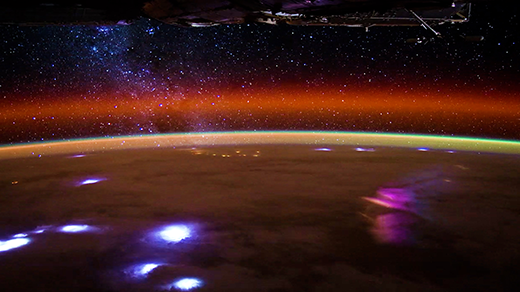
Lightning begins inside a thundercloud, where rising air currents carry water droplets and ice crystals upward. Collisions between these particles strip electrons from some, creating a charge separation: positive charges accumulate at the top of the cloud, negative charges at the bottom. When the electric field becomes strong enough—around 1 million volts per meter—the air ionizes and a conductive path called a stepped leader zigzags toward the ground. This leader is invisible to the naked eye but creates a channel. Once it connects with a rising positive streamer from the ground, a massive return stroke surges upward, producing the bright flash we see. The entire sequence happens in less than half a second.
2. Why doesn't lightning happen every time there's a thundercloud?
Charge separation occurs in most thunderstorms, but lightning requires the electric field to exceed a critical threshold. Often, the field stays just below that point because charge leaks away slowly through the air—air is an excellent insulator. For lightning to initiate, something must push the field over the edge. One classical idea is that large, graupel (soft hail) particles become heavy and fall, enhancing charge separation. Even so, measurements show that fields inside clouds rarely reach the theoretical breakdown value. This discrepancy led researchers like Joseph Dwyer to search for additional mechanisms, such as runaway breakdown triggered by high-energy particles from space.
3. How do cosmic rays contribute to lightning initiation?
Cosmic rays—high-energy particles from the sun and other cosmic sources—constantly bombard Earth's atmosphere. Dwyer's work showed that a single cosmic ray can knock an electron loose with enough energy to start a chain reaction. In a strong electric field, that electron accelerates, collides with air molecules, and frees more electrons, creating an avalanche. This relativistic runaway electron avalanche can produce enough ionization to create a conductive channel, even when the overall field is below the traditional breakdown voltage. Satellite observations and lab experiments have supported this idea, suggesting that lightning may be seeded by cosmic rays—a hypothesis that makes the phenomenon even more cosmic than we ever imagined.
4. What role do ice particles play in charging a thundercloud?
Ice is essential. Within a thunderstorm updraft, water droplets freeze into ice crystals and graupel. When these collide, electrons transfer from smaller ice crystals to the larger graupel particles. The lighter ice crystals, now positively charged, rise to the top of the cloud, while the heavier, negatively charged graupel sinks. This creates the classic charge structure. Without ice, a thunderstorm would struggle to develop the strong separation needed for lightning. Even warm clouds with only liquid water rarely produce lightning. That's why lightning is most common in clouds that extend above the freezing level—where ice is abundant.
5. Why does lightning sometimes strike the same place multiple times?
A single lightning stroke usually lasts less than a second, but multiple strokes often follow the same ionized channel. After the first return stroke, the channel remains conductive for a few hundred milliseconds. A new leader can propagate down that same path, producing a subsequent stroke. These can occur up to 20 or more times in the same flash, which is why lightning appears to flicker. Tall structures like skyscrapers or lightning rods are especially prone because they provide a preferred path for the electric field to concentrate. The Empire State Building, for example, gets hit about 25 times per year, often multiple times during the same storm.
6. How do scientists study lightning today?
Modern lightning research combines satellite data, ground-based arrays, and high-speed photography. NASA's Wind satellite, originally used for solar observations, helped Dwyer measure particle energies. On Earth, networks like the National Lightning Detection Network triangulate strikes using radio waves. Researchers also launch rockets trailing wires into storms to trigger lightning, allowing close-up studies of its electrical properties. More recently, aircraft have been flown into thunderstorms to sample electric fields and particle fluxes. These tools have revealed that lightning is far more complex than a simple spark—it involves relativistic particles, X-rays, and even gamma-ray flashes, blurring the line between terrestrial weather and astrophysics.