DIY ECN-2 Developer: A Step-by-Step Guide to Mixing Your Own Chemicals at Home
Introduction
If you're into analog photography and want to process Kodak Vision3 or CineStill films at home, you'll need ECN-2 chemistry. While many enthusiasts buy pre-mixed kits, mixing your own developer not only saves money (as little as 50 cents per roll) but also gives you total control over freshness and quality. The challenge is that mixed developer spoils quickly and degrades with use. This guide, inspired by No Grain No Gain, shows you how to create two stable stock solutions that you can combine on demand with a small amount of CD-3 developing agent. This way, you always have fresh developer ready without waste. We'll also touch on handling RemJet films. Let’s get started!
What You Need
- Sodium sulfite (anhydrous or crystalline, adjust amounts if using hydrate)
- Potassium bromide (anhydrous)
- Sodium carbonate (anhydrous)
- Sodium bicarbonate (anhydrous)
- CD-3 developing agent (specialist chemical, available from photochemistry suppliers)
- Distilled water (ion-free, to avoid contaminants)
- Two glass or HDPE bottles (for stock solutions A and B)
- Digital scale (accurate to 0.1 g)
- Beakers or measuring cylinders
- Stirring rod or magnetic stirrer
- Funnel
- Safety gear: gloves, goggles, and a well-ventilated area (chemicals are irritants)
Step-by-Step Instructions
Step 1: Understanding the System
Instead of mixing a one-shot developer that goes bad fast, you’ll prepare two separate stock solutions: Solution A (containing sodium sulfite, potassium bromide, and sodium carbonate) and Solution B (containing sodium bicarbonate). These can be stored for months in sealed bottles. When you need to develop film, you combine equal parts of A and B with a precise amount of CD-3 and water. This ensures the final working developer is always fresh.
Step 2: Prepare Solution A (Active Alkaline Stock)
Weigh out the following dry chemicals:
- Sodium sulfite: 100 g
- Potassium bromide: 2.5 g
- Sodium carbonate: 75 g
Dissolve them in about 800 mL of distilled water. Use warm water (around 30–40°C) to speed dissolution, but avoid overheating. Stir until completely clear. Then add distilled water to bring the total volume to 1 liter. Pour into a labeled bottle, seal tightly, and store at room temperature away from light. This solution is alkaline – handle with care.
Step 3: Prepare Solution B (Buffering Stock)
Weigh out 50 g of sodium bicarbonate. Dissolve in 800 mL distilled water, then top up to 1 liter. This solution is used to adjust pH when mixed with A. Store in a separate labeled bottle.
Step 4: Storing the Stock Solutions
Both stock solutions can be kept for up to 6 months if stored in full, airtight containers with minimal headspace. Avoid exposing to air or contamination (don’t put stir rods in the bottles). Label clearly with contents and date.
Step 5: Mixing the Working Developer (On-Demand)
When you're ready to develop, prepare a small batch. For each roll (depending on tank size), you’ll need about 500–600 mL of working solution. For a typical 500 mL batch:
- Measure 125 mL of Solution A and pour into a beaker.
- Measure 125 mL of Solution B and add to the same beaker.
- Add 2 g of CD-3 developing agent (powder). Stir gently until fully dissolved. The solution will turn light yellow.
- Add distilled water to bring the total volume to 500 mL. Stir well.
Use this developer immediately. Do not store the working solution – it will oxidize within hours. Discard after use.
Step 6: Using the Developer (Standard ECN-2 Process)
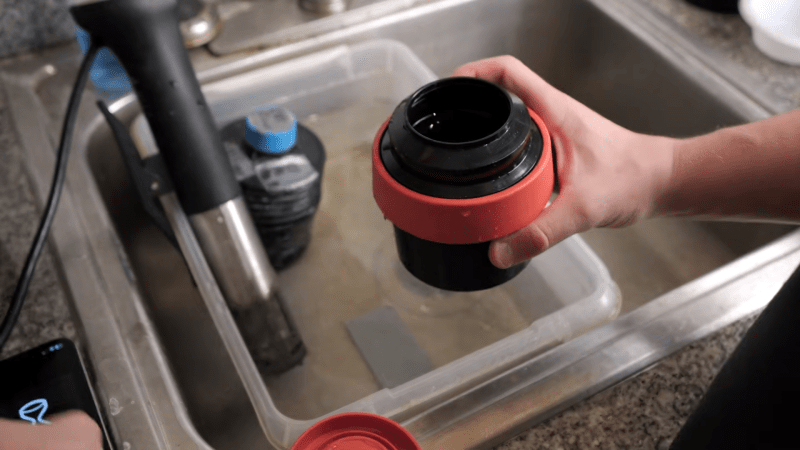
Heat the working developer to 41°C (105.8°F). Develop for 3 minutes with agitation (initial 15 seconds continuous, then 5 seconds every 30 seconds). After development, proceed with stop bath, wash, bleach, fix, and final rinse as per standard ECN-2 procedure. If you are developing RemJet films (like Kodak Vision3 with the carbon backing), you must first remove the RemJet layer. This can be done by a pre-wash in a sodium carbonate solution (1% w/v) at 38°C for about 30 seconds with agitation. See our RemJet removal tip below.
Step 7: Calculating Cost Savings
With stock solutions lasting months, each roll costs roughly $0.50 in chemicals (excluding water and power). Compare this to $4–$8 per roll for lab processing or $2–$3 for pre-mixed kits. The labor is the trade-off, but for serious home developers, the freshness and control are unbeatable.
Tips and Reminders
- Precision matters: Use a digital scale to 0.1g accuracy. Errors in chemical ratios affect pH and development quality.
- Water quality: Always use distilled water. Tap water contains minerals that can cause precipitation or staining.
- Safety first: Wear gloves and goggles. Sodium sulfite and CD-3 can irritate skin and eyes. Work in a ventilated area.
- RemJet removal: For films with a carbon anti-halation layer, pre-wash the film in a solution of 15 g sodium carbonate per liter of water at 38°C for 30 seconds. Then rinse thoroughly before development.
- Test your chemistry: Before processing a precious roll, do a clip test with a piece of exposed film leader. Adjust development time or chemical amounts if needed.
- Storage: Keep stock solutions in dark, cool places. If you see cloudiness or discoloration, discard and make fresh.
- Experiment: Once comfortable, you can tweak concentrations for different contrast or grain effects – but stick to the formula first.
Mixing your own ECN-2 developer is a rewarding step in home film processing. For more advanced techniques, check out our previous coverage on modern film development.