Unraveling the Mysteries of Lightning: New Insights into an Ancient Phenomenon
Introduction: A Shift from Solar Flares to Earthly Storms
For years, physicist Joseph Dwyer studied the violent eruptions on the sun, analyzing data from NASA's Wind satellite hovering a million miles away. But after moving to Florida around the turn of the millennium, his focus shifted to a phenomenon closer to home: lightning. Dwyer's research has since reshaped our understanding of what triggers these brilliant electrical discharges, revealing a process far more complex than previously imagined.
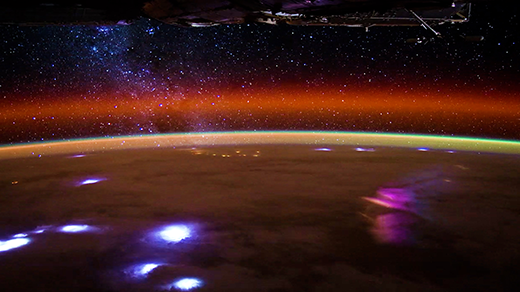
The Traditional Explanation: Cloud Electrification and Breakdown
For decades, the accepted theory of lightning formation relied on a simple chain of events:
- Charge separation within clouds: Collisions between ice crystals and softer hail pellets (graupel) in turbulent updrafts transfer charge. Lighter ice crystals become positively charged and rise, while heavier graupel becomes negatively charged and sinks.
- Building electric fields: This separation creates a strong vertical electric field within the thundercloud.
- Dielectric breakdown: When the field exceeds a threshold — roughly 3 million volts per meter — the air's insulating properties break down. A conductive channel (a lightning leader) forms, followed by the main discharge we see as lightning.
This model seemed to explain the basic physics, but it left critical questions unanswered — particularly about the extreme energies observed in lightning.
The Puzzling Weakness of Measured Fields
When Dwyer and his team began directly measuring electric fields inside thunderclouds, they encountered a surprising anomaly. “We never saw fields even close to the breakdown value,” Dwyer noted. Inside storms, measured fields barely reached 1–2 million volts per meter — only a fraction of the traditional threshold. So how could lightning initiate under such conditions?
The answer, Dwyer proposed, lies in high-energy particles — specifically, runaway electrons accelerated to relativistic speeds by cosmic rays from space or from radioactive decay on Earth.
The Runaway Electron Theory: A New Mechanism
Dwyer's breakthrough concept, known as the relativistic breakdown theory, works as follows:
- A high-energy cosmic ray (or other energetic particle) enters the atmosphere and collides with air molecules, producing a shower of relativistic electrons.
- These fast-moving electrons, under the influence of the cloud's electric field, gain even more energy — a process called runaway — because at high speeds they experience less drag from air molecules.
- As they zip through the air, they knock loose additional free electrons via impact ionization, creating an avalanche effect.
- This avalanche generates a narrow, conducting plasma channel at electric fields far lower than what traditional breakdown requires — effectively lowering the threshold for lightning initiation.
The theory elegantly explains why measured fields inside storms are weaker than expected: lightning doesn't need the full breakdown field if a seed population of relativistic electrons is present.
Gamma Rays and X-Rays: Lightning's Unseen Emissions
Further evidence for Dwyer's theory came from detections of high-energy radiation associated with thunderstorms. In the 1990s, satellites observed terrestrial gamma-ray flashes (TGFs) — brief bursts of gamma rays emanating from thunderclouds. Later, aircraft and detectors on the ground saw x-rays produced directly by lightning leaders.
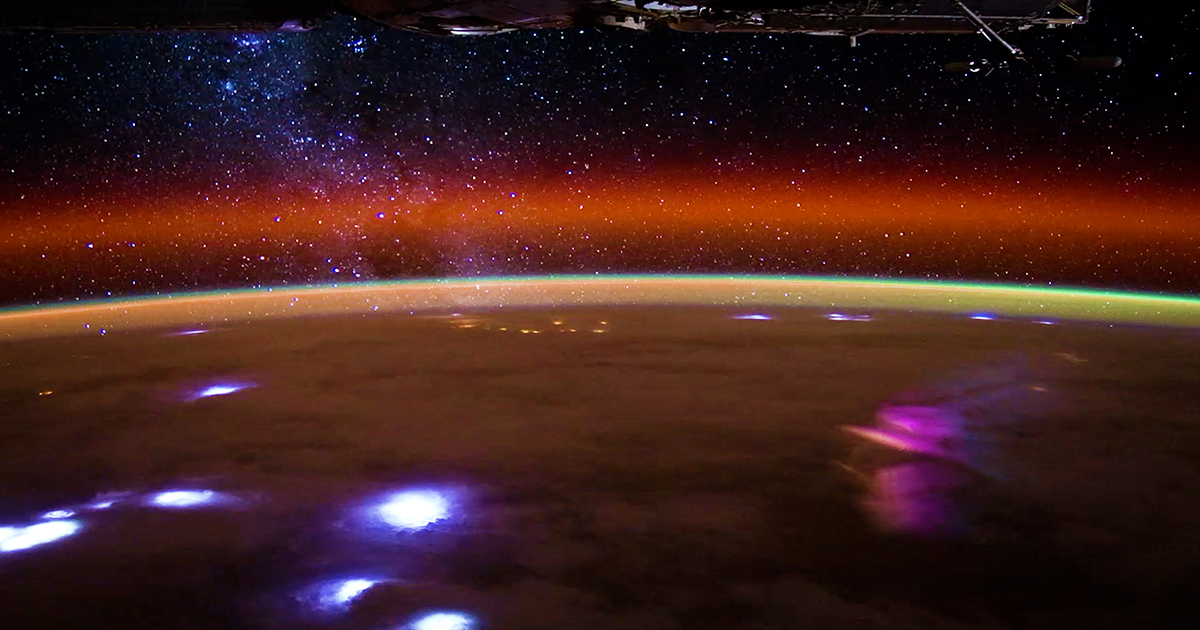
These emissions are signatures of runaway electrons slamming into air molecules, releasing Bremsstrahlung radiation. According to Dwyer, the energy of these gamma rays — some exceeding 40 million electron volts — can only be explained by the presence of relativistic electrons within the cloud. This provided strong in situ support for the runaway breakdown mechanism.
Implications for the Future: Why It Matters
Understanding lightning's true cause has practical consequences:
- Aircraft and spacecraft safety: If lightning can be triggered by cosmic rays, higher-altitude flights near thunderstorms may face elevated risk.
- Cross-cultural significance: Lightning is a natural hazard that has affected civilizations for millennia — improved knowledge could enhance prediction.
- Link to space weather: The role of cosmic rays suggests that solar activity, which modulates cosmic ray flux, may indirectly influence lightning frequency — a connection still under study.
Yet many questions remain. How exactly do the initial relativistic seed electrons get produced? What determines the branching patterns of lightning channels? And could this phenomenon occur on other planets with thick atmospheres — like Jupiter, Saturn, or Venus?
Conclusion: More Interesting Than Ever
As Dwyer himself quipped, the old answer — “ice particles rubbing together” — was only the beginning. The reality is far richer, involving high-energy particles from across the galaxy, relativistic avalanches, and bursts of gamma rays. Thanks to decades of careful observation and bold theorizing, the science of lightning is shedding its conventional skin — and emerging as a fascinating blend of atmospheric physics, particle acceleration, and cosmic influences.
For further reading, see the traditional theory or jump to the runaway electron model.