AI Coding Agents in 2026: Key Questions and Benchmark Insights
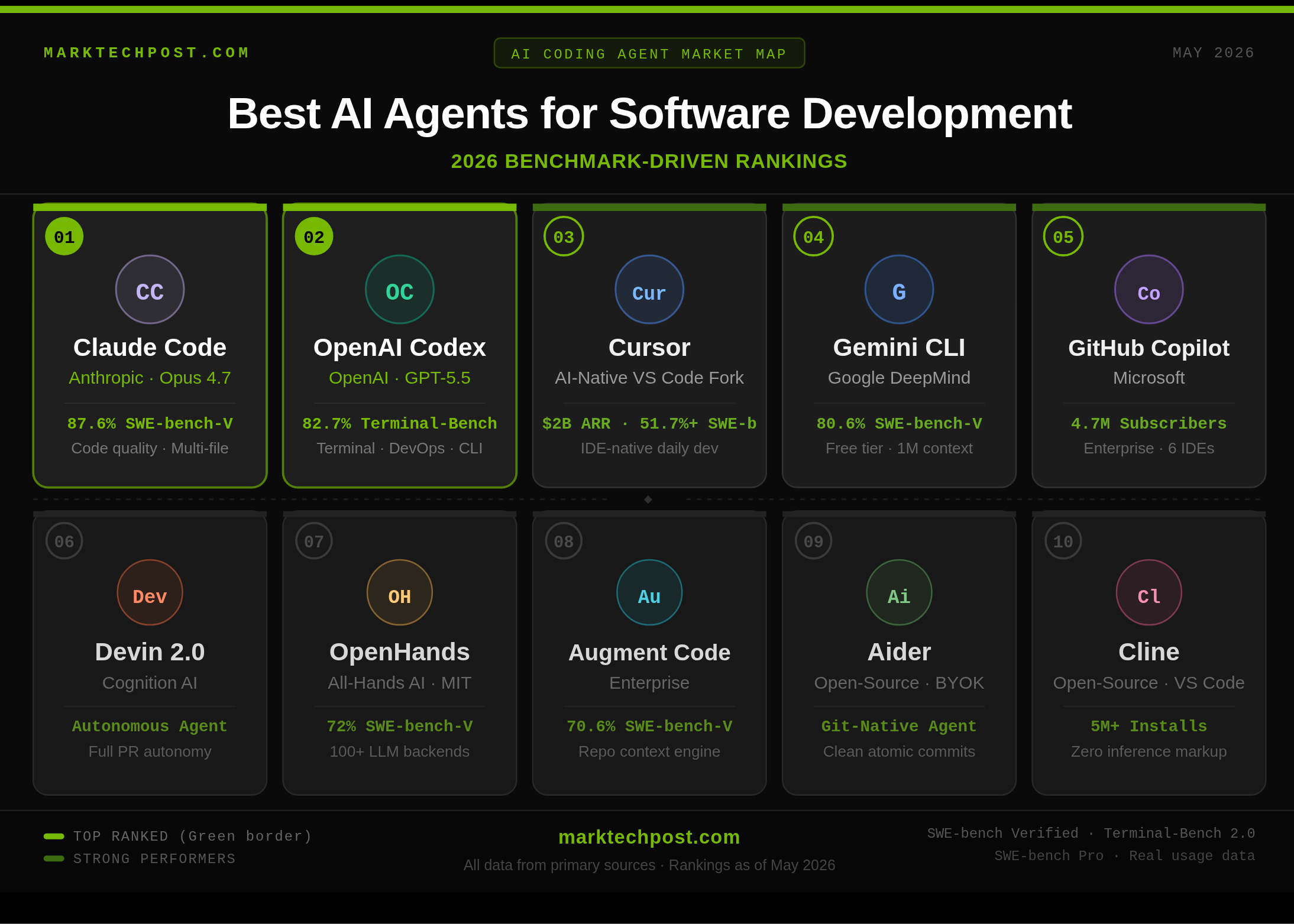
The landscape of AI coding agents has transformed dramatically since 2024. What began as simple autocomplete has evolved into sophisticated systems capable of handling entire development workflows autonomously. By early 2026, over 85% of developers regularly use AI assistance, and the market now includes terminal agents, AI-native IDEs, cloud-hosted engineers, and open-source frameworks. But with every tool claiming superiority, understanding the benchmarks that truly matter is critical. This Q&A explores the current state of AI coding agents, the controversies surrounding popular benchmarks like SWE-bench Verified, and what developers should look for when choosing a tool.
What are the main types of AI coding agents available today?
AI coding agents have branched into four primary categories. Terminal agents operate within the command line, interacting with codebases via shell commands and file system access. AI-native IDEs embed intelligent assistance directly into the editor, offering features like real-time code generation, debugging, and refactoring suggestions. Cloud-hosted autonomous engineers run on remote servers, capable of reading GitHub issues, writing fixes, running tests, and opening pull requests without human intervention. Finally, open-source frameworks provide modular architectures where developers can swap in their preferred models, offering flexibility and customization. Each type serves different use cases, from quick inline suggestions to full end-to-end task automation. Understanding these archetypes helps developers choose the right tool for their workflow and project complexity.
Why is SWE-bench Verified now considered unreliable?
In February 2026, OpenAI's Frontier Evals team published a critical analysis revealing significant flaws in SWE-bench Verified, previously the industry standard for evaluating AI coding agents. Their audit of 138 hard problems across 64 runs found that 59.4% of test cases were flawed or unsolvable, often requiring exact function names not mentioned in the problem statements or checking unrelated behavior. More troubling, they discovered that every major frontier model—including GPT-5.2, Claude Opus 4.5, and Gemini 3 Flash—could reproduce correct solutions verbatim from memory using only the task ID, confirming systematic training data contamination. OpenAI concluded that improvements on SWE-bench Verified no longer reflect real-world software development abilities. They now recommend SWE-bench Pro as a replacement, though other labs still report SWE-bench Verified scores, maintaining its utility for broad comparisons.
What metrics should developers use instead of SWE-bench Verified?
Given the issues with SWE-bench Verified, developers should focus on benchmarks that evaluate real-world production readiness. SWE-bench Pro is emerging as the replacement, designed to avoid contamination and emphasize practical problem-solving. Other valuable metrics include Agent-as-Observer scores, which measure an agent's ability to navigate and understand unfamiliar codebases, and HumanEval+ for functional correctness. Additionally, look for tools that provide completion rate on complex multi-step tasks, test pass rate after code generation, and integration latency with CI/CD pipelines. Third-party evaluations from organizations like CodeSignal or internal benchmarks from companies like Google and Microsoft also offer insights. Ultimately, the best metric is your own project's experience: trial agents on real issues and measure time saved, bug reduction, and developer satisfaction.
How do cloud-hosted autonomous engineers differ from terminal agents?
Cloud-hosted autonomous engineers and terminal agents represent two distinct operational paradigms. Terminal agents run locally on the developer's machine, directly interacting with the operating system, file system, and command-line tools. They are ideal for offline tasks, sensitive projects, and environments with strict data security requirements. However, they consume local resources and may be limited by hardware constraints. In contrast, cloud-hosted autonomous engineers operate on remote servers with virtually unlimited compute power. They can handle large-scale codebases, execute parallel processes, and integrate seamlessly with cloud-based CI/CD systems. Their autonomy allows them to work independently for hours, but they require internet connectivity and raise concerns about data privacy. Choosing between them depends on factors like project size, compliance needs, and the need for persistent, unattended operation.

What role do open-source frameworks play in AI coding agents?
Open-source frameworks provide a flexible alternative to commercial, closed-source AI coding agents. They allow developers to choose from various foundation models—such as LLaMA, Mixtral, or CodeGemma—and configure the agent's behavior, tool access, and decision-making logic. This flexibility is crucial for teams that need custom workflows, want to avoid vendor lock-in, or require fine-tuning for specific domains. Popular frameworks like LangChain, AutoGPT, and Open Interpreter offer modular components for planning, execution, and error handling. However, they demand more technical expertise to set up and maintain compared to turnkey solutions. Despite this, open-source frameworks are rapidly gaining adoption because they allow companies to maintain control over their code and data, and they enable rapid experimentation with emerging models and techniques. The trade-off is between out-of-the-box convenience and long-term adaptability.
How has the AI coding agent market changed since 2024?
The AI coding agent market has undergone a dramatic transformation since 2024. Initially, AI assistance was limited to inline autocomplete suggestions that helped complete lines or functions. By early 2026, autonomous systems have emerged that can read GitHub issues, navigate multi-file codebases, write fixes, execute tests, and open pull requests without human input. The user base expanded rapidly, with roughly 85% of developers regularly using some form of AI aid. The market has also fractured into distinct archetypes: terminal agents for hands-on control, AI-native IDEs for integrated development, cloud-hosted engineers for large-scale automation, and open-source frameworks for customization. Competition among providers has intensified, leading to rapid feature releases and pricing adjustments. Additionally, the benchmark landscape has shifted, with SWE-bench Verified losing credibility and new standards like SWE-bench Pro emerging. These changes reflect a maturing field that's moving from novelty to essential infrastructure.
What should developers consider when choosing an AI coding agent in 2026?
When selecting an AI coding agent, developers must weigh several factors beyond benchmark scores. First, integration with your existing stack (e.g., Git, CI/CD pipelines, issue trackers) is crucial. Second, autonomy level: some agents require human approval for each step, while others operate independently. Consider the security and privacy implications of sending code to cloud services versus using local models. Third, model transparency—does the agent disclose which model it uses and allow switching? Fourth, cost: per-usage pricing can be economical for small teams but may scale poorly for large projects. Fifth, community support and documentation quality affect long-term usability. Finally, test the agent on a representative sample of your real-world tasks. Benchmark averages may not reflect performance on your specific codebase, language, or problem types. A trial period with measurable metrics like time saved and bug reduction is the best evaluation.