From Promise to Pavement: A Practical Guide to Evaluating Autonomous Trucking Readiness vs. Passenger Car FSD
Overview
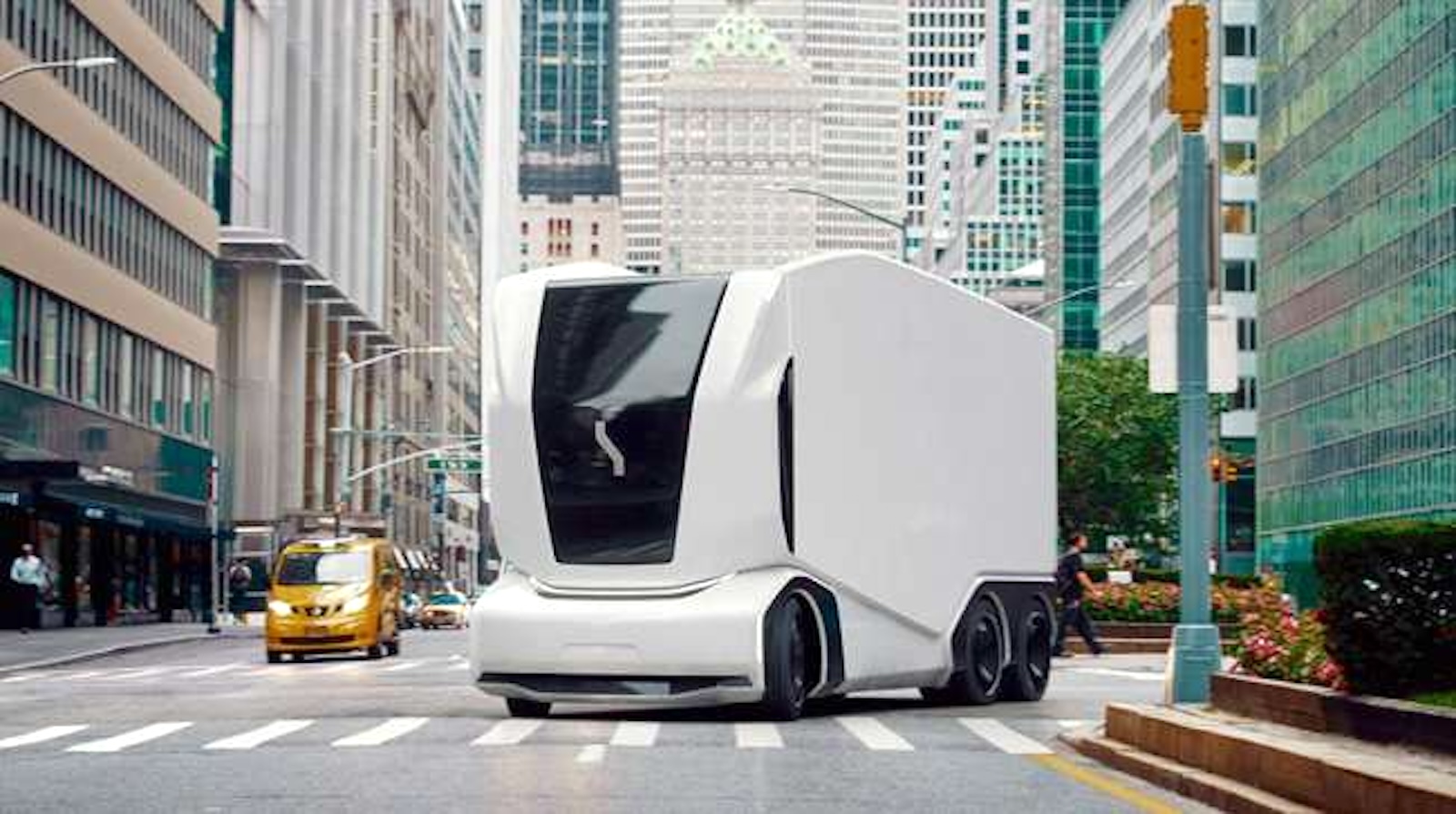
Autonomous driving has become a battlefield of bold promises and real-world deployments. On one side, Elon Musk repeatedly claims that Full Self-Driving (FSD) for passenger cars is just around the corner—this time, by year's end. On the other, companies like Einride are already operating Level 4 (L4) autonomous big trucks on public roads in Sweden and the US. This tutorial cuts through the hype, offering a structured, step-by-step approach to understanding who is actually delivering product and who is delivering promises. You will learn how to assess the maturity of autonomous driving systems, compare timeline claims against operational evidence, and apply a decision-making framework for fleet operators evaluating autonomous trucking solutions.
Prerequisites
- Basic understanding of SAE automation levels (L0-L5) – if you need a refresher, see our SAE Levels explained section.
- Familiarity with current autonomous vehicle (AV) industry landscape – including major players like Tesla, Waymo, Cruise, and Einride.
- A willingness to separate marketing from technical reality – this guide relies on public data and verifiable deployments, not press releases.
Step-by-Step Guide
Step 1: Understand the Core Difference – L2 vs. L4
Tesla's FSD is currently classified as L2 (or at best L2+) – it requires constant driver supervision. Einride's trucks operate at L4, meaning they can handle all driving tasks within specific operational design domains (ODDs) without human intervention. This is not a minor distinction. L4 implies that the vehicle can safely come to a stop if something goes wrong; L2 does not.
To evaluate any autonomous claim, first ask: What level of automation is actually being deployed? Look for statements about disengagement rates, ODD limitations, and safety driver presence. If a system still requires a human behind the wheel, it is not self-driving.
Step 2: Check the Operational Design Domain (ODD)
Autonomous systems do not work everywhere. Tesla’s FSD attempts to handle urban and highway environments but struggles with edge cases. Einride’s trucks operate in defined corridors, often between warehouses or distribution centers. The narrower the ODD, the easier it is to validate safety.
Ask: Where does the system operate? Under what weather, lighting, and traffic conditions? A system that works only on well-mapped highways in clear weather is very different from one that claims to handle any road.
Step 3: Examine the Proof of Deployment
Promises are not evidence. When Elon says FSD will be ready by year's end, note that he has made similar claims at least ten times before. Meanwhile, Einride is running commercial L4 truck trips between Gothenburg and Helsingborg, Sweden. They have delivered real cargo without drivers in the vehicle.
- Look for verifiable metrics: miles driven autonomously (with disengagements recorded), collision rates, and public safety reports.
- Check regulatory approvals: Does the company have permits to operate without a safety driver? Einride does in certain locations; Tesla does not.
- Talk to customers: Are logistics companies like DB Schenker (which works with Einride) publicly endorsing the service? That carries more weight than a CEO tweet.
Step 4: Analyze the Timeline vs. Reality
Create a simple timeline comparison. For Tesla FSD: Promises started in 2016. Beta versions were released in 2020. In 2024, the system is still L2. For Einride: Started development in 2016, began pilot tests in 2019, launched commercial L4 operations in 2022, and expanded to the US in 2023. The difference is clear: one company iterates on a driver-assist feature; the other operationalizes true autonomy.
Use this template: For each autonomous vehicle maker, note the year they promised a milestone, the year they actually achieved it (if at all), and whether the achievement matched the original claim. A pattern of repeated “next year” promises indicates hype over substance.

Step 5: Evaluate the Business Model
FSD is sold as a $12,000 option for passenger cars, with uncertain transferability. Einride sells transportation-as-a-service (TaaS) or licenses its technology to fleets. Ask:
- Is the product aimed at early adopters or at high-volume commercial operations?
- Does the company publish safety cases and third-party audits?
- Is the system designed for fleet economics (lower total cost of ownership) rather than flashy features?
For fleet operators, the Einride model is more directly applicable: you can contract autonomous trucking today, on specific routes, and see immediate ROI. FSD for personal vehicles remains a speculative investment.
Step 6: Apply a Decision Framework for Adoption
If you are a logistics manager or fleet owner considering autonomous trucks, follow these criteria:
- Match the ODD to your routes. Does the autonomous system cover the roads you use most?
- Assess safety case maturity. Has the system been tested on billions of miles or just thousands? Einride uses simulation and real-world data.
- Check regulatory landscape. In Europe, Einride has approval; in the US, it varies by state.
- Compare total cost. L4 trucks may reduce driver costs, but require sensor maintenance and infrastructure integration.
- Start small. Pilot a single route before expanding. Einride recommends a 3-month trial.
Common Mistakes
- Believing that L2+ and L4 are close. They are not. The jump from supervised autonomy to unsupervised is the hardest in AV development.
- Ignoring the difference between public road testing and commercial deployment. Test programs often have safety drivers; commercial operations may not.
- Relying on CEO statements as evidence. Always cross-reference with third-party data, regulatory filings, and press releases from partners.
- Assuming that because a system works on highways, it will work on city streets. ODD restrictions are critical.
- Neglecting the role of infrastructure. Autonomous trucks benefit from dedicated lanes and digital mapping, which are not always in place.
Summary
Elon Musk's repeated promises of FSD by year's end have not materialized after nearly a decade. Meanwhile, Einride is operating L4 autonomous trucks today, moving real freight without a driver inside. This guide has shown how to cut through the noise: understand the automation level, examine the ODD, demand verifiable deployment evidence, and compare timelines versus actual milestones. For fleet operators, the actionable takeaway is to pilot autonomous trucking on simple, well-mapped routes before investing in passenger car FSD speculation. The road to autonomy is paved with proof, not promises.