Building a Talking C-3PO Head with Modern AI
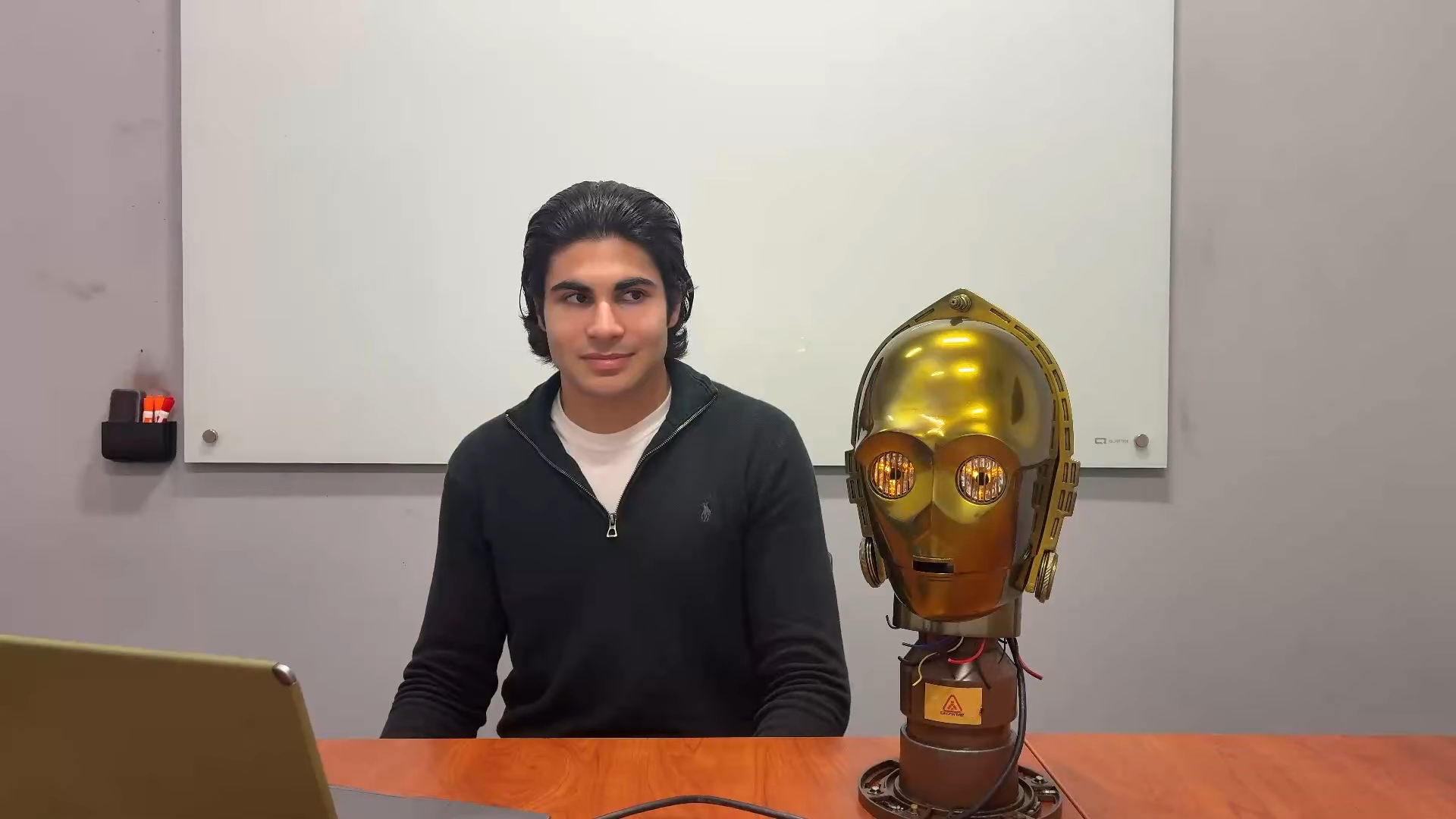
Bringing the golden protocol droid to life has always been a dream for Star Wars fans, but replicating his precise speech and mannerisms was nearly impossible—until now. Makers like Samuel Potozkin have harnessed modern AI to build a conversational C-3PO head. This project focuses on the head alone, using a Raspberry Pi 5 as the brain, combined with speech-to-text, a large language model, and a custom voice synthesizer. The result is a droid you can actually talk to, despite some quirks. If you've ever wanted to own a piece of the galaxy far, far away, here's how it works.
1. Why are C-3PO replicas so rare compared to other movie robots?
C-3PO is one of cinema's most iconic droids, but building a convincing replica is notoriously difficult. Unlike static props or simple animatronics, C-3PO's charm lies in his distinctive, fussy speech and animated mannerisms. Recreating these nuances requires sophisticated technology—far beyond basic microcontrollers. His voice, a fast-paced, slightly frantic monotone, is hard to mimic, and his movements demand precise servo control. Most hobbyists shy away because the effort-to-reward ratio seems steep. However, as demonstrated by Samuel Potozkin's build, modern AI tools—specifically large language models and real-time speech processing—have dramatically lowered the barrier. For the first time, enthusiasts can create a C-3PO that not only looks the part but also holds a conversation. This project proves that with the right tech, even the most challenging droid replica becomes achievable.
2. What hardware powers this C-3PO head build?
The brain of the operation is a Raspberry Pi 5, chosen for its balance of processing power and compact size. This tiny computer handles all the heavy lifting: it runs a microphone to capture speech, processes that audio through a real-time speech-to-text engine, and then sends the transcribed text to a large language model for interpretation. The Pi also manages the text-to-speech synthesis that voices the droid's responses. No elaborate custom circuit boards or expensive GPUs are required—just off-the-shelf components. The head itself appears to be a 3D-printed or sculpted shell that houses the electronics. While the build is focused on the head, the same system could theoretically be extended to a full-body droid. For those eager to replicate the project, detailed materials are shared via Google Drive and GitHub, making it accessible to other makers.
3. How does the AI pipeline enable natural conversation with C-3PO?
The process involves four key stages. First, a microphone captures your speech, which is converted to text by a real-time speech-to-text engine (likely Whisper or similar). Second, that text is fed into a large language model (LLM) that interprets the meaning and generates a relevant response. Third, the response passes through a processing layer that adjusts the tone and phrasing to match C-3PO's characteristic fussiness and clipped diction. Finally, a text-to-speech synthesizer voices the output through a speaker, mimicking the iconic metallic cadence. This pipeline runs almost instantly on the Raspberry Pi 5, enabling a back-and-forth dialogue. The clever part is the processing layer: it ensures the bot doesn't sound like a generic AI assistant but rather like a slightly exasperated protocol droid. While not perfect, the effect is surprisingly immersive.
4. How accurate is this replica compared to the movie version?
Samuel Potozkin's C-3PO is not an exact duplicate. The most obvious differences are in responsiveness and speech fidelity. The droid is noticeably slower to respond than the movie character, due to the processing time required by the AI pipeline. The banter, or "patter," also isn't quite on target—while the voice synthesis makes a good effort at the original's pitch and rhythm, the overall delivery can feel a bit "robotic." Irony intended! In the films, C-3PO's dialogue flows naturally, but this replica's replies sometimes lack that organic spontaneity. Still, for a hobbyist project, the result is impressive. It captures the essence of the character—the polite yet anxious personality—and offers a glimpse into what a fully refined version could achieve. As the maker notes, this is something we haven't really seen done with modern AI before, making it a notable achievement.
5. Where can builders find the materials and code for this project?
All the resources you need to create your own conversational C-3PO head are publicly available. The maker has shared in-depth build materials via Google Drive and the source code on GitHub. These include wiring diagrams, the Python scripts controlling the AI pipeline, configuration files for the speech-to-text and LLM, and 3D model files for the head shell (if applicable). The documentation is thorough enough for intermediate makers to follow. By accessing these resources, you can adapt the project to your own hardware or even improve upon the dialogue system. It's worth noting that the core components—Raspberry Pi 5, microphone, speaker—are all inexpensive and widely available. Links to the exact repositories are provided in the original article, but searching for "Samuel Potozkin C-3PO GitHub" will get you started. This open-source approach encourages community improvements, so expect future versions to be even more polished.
6. What are the main limitations of this build?
Despite its ingenuity, the project has several drawbacks. First, response latency: the droid takes a few seconds to reply, breaking the illusion of fluid conversation. Second, the voice synthesis, while close, doesn't perfectly capture Anthony Daniels' original performance—the intonation can sound flat or garbled. Third, the personality emulation is limited: the LLM generates coherent replies, but they lack the consistent fussiness and dramatic flair of the movie character. The processing layer helps, but it's not seamless. Additionally, the build is only a head; a full-body droid would require integrating motor controls for limbs and torso. Finally, the system relies on an internet connection for the LLM (though local models could be used). Despite these flaws, the project is a remarkable proof-of-concept. It shows what's possible with accessible AI tools, and many of these limitations can be addressed with better models or more powerful hardware.
7. Are there other types of classic droid replicas featured on Hackaday?
Yes! While conversational C-3PO is a rare innovation, Hackaday has covered many classic droid builds over the years. These include fully functional R2-D2 units with motorized legs and projector heads, BB-8 replicas that roll and beep, and even IG-88 animatronics. Most of these focus on movement and sound effects rather than AI dialogue. For example, typical R2-D2 builds use remote control or simple autonomous routines, emitting recorded beeps and whistles. The shift to AI-powered conversation is a new frontier. If you prefer a more traditional approach, a quick search of the site will reveal many impressive projects. However, Potozkin's work suggests that the future of droid replicas may lie in blending accurate physical builds with conversational AI. For now, this C-3PO head stands out as a unique blend of fandom and cutting-edge technology.