Affordable Auto Diagnostics: Building a Low-Cost TDR with Audio Hardware
Time domain reflectometers (TDRs) are invaluable for locating breaks in wiring, but their high cost often puts them beyond the reach of home mechanics. However, a clever approach using inexpensive USB audio devices and sine wave signals offers a budget-friendly alternative. This article explores how this technique works, the hardware required, and its practical applications for automotive troubleshooting.
What Is a Time Domain Reflectometer (TDR) and Why Is It Useful for Auto Diagnostics?
A time domain reflectometer is a diagnostic tool that sends a short electrical pulse down a wire and measures the time it takes for the pulse to reflect back from the end or from a fault. This time is directly proportional to the distance, so the device can pinpoint the location of a break, short, or other impedance change in a wiring harness. For auto diagnostics, a TDR is especially valuable because modern vehicles have complex wiring that can be difficult to trace. Instead of manually probing each wire, a mechanic can connect a TDR to a suspect circuit and instantly know exactly where the fault lies—saving hours of labor and guesswork. This makes it an essential tool for professional shops, but the high cost has limited its use among hobbyists.
Why Are Conventional TDRs So Expensive?
Traditional TDRs rely on very short electrical pulses—often in the nanosecond range—traveling at nearly the speed of light. Measuring such fast signals requires extremely precise timing circuits and high-bandwidth sampling hardware, which drives up the cost significantly. Additionally, these devices must filter out noise and handle reflections from multiple points along a wire. Professional-grade TDRs can cost hundreds or even thousands of dollars, putting them out of reach for hobbyists or small DIY mechanics who only need occasional use. The challenge has always been to achieve similar functionality with affordable, off-the-shelf components.
How Does the Low-Cost TDR Using Audio Hardware Work?
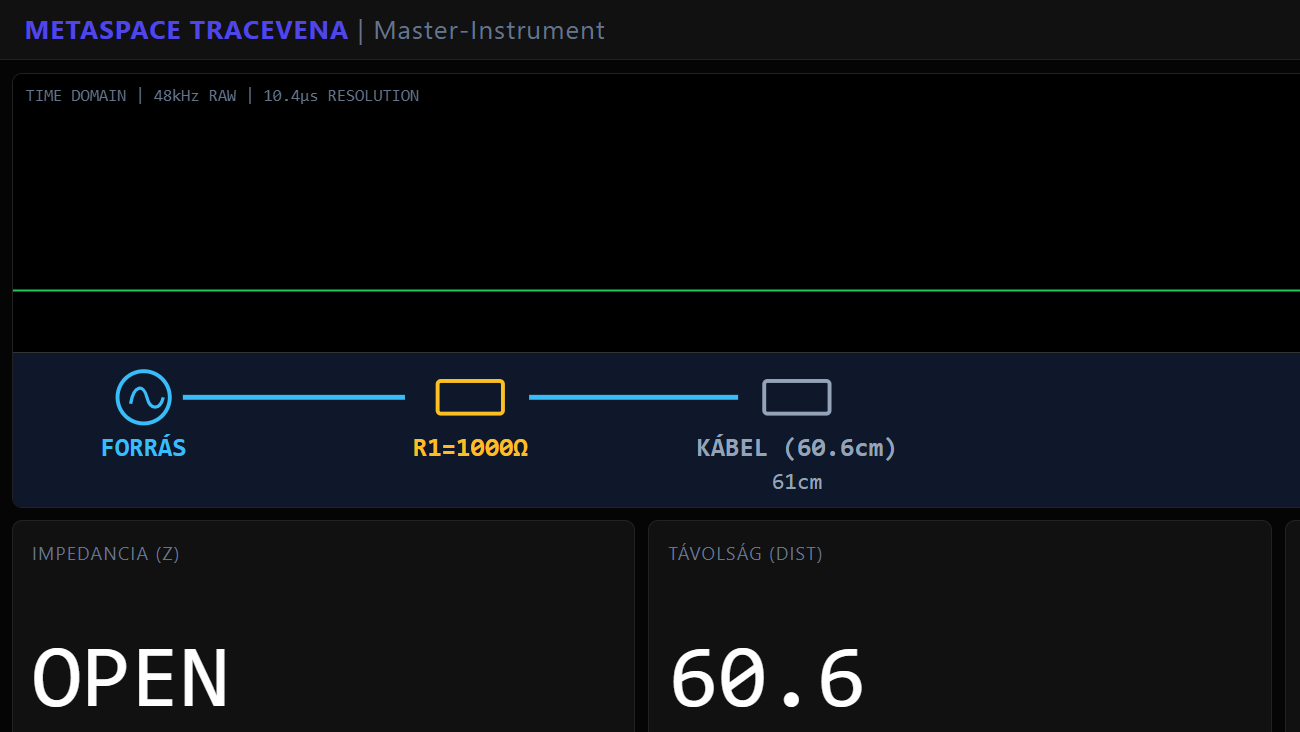
Instead of sending a single short pulse, this innovative approach uses a continuous sine wave generated by a cheap USB audio device. The device sends a 4 kHz or 8 kHz sine wave down the wire, then listens for the reflected signal. By measuring the phase shift between the transmitted and reflected waves, the system can calculate the distance to the end of the wire or to a break. This works because the phase angle changes with the length of the wire and the frequency used. The technique is much slower than traditional TDR, but it eliminates the need for expensive fast electronics. With smart software processing, the inventor claims an impressive resolution down to 1 cm, making it practical for automotive harness diagnosis.
What Components Are Needed to Build This Cheap TDR?
The core of the setup is a C-Media USB audio device, which can generate and capture sine wave signals. Additional supporting hardware is required: protection circuits to prevent damage from voltage spikes on the car's wiring, and impedance-matching components to tune the system for different cable lengths (short vs. long runs). The processing is done in software on a computer, where the phase shift is calculated. The total cost is a fraction of a commercial TDR, typically under $50 if you already have a computer. The inventor notes that careful calibration is needed, but the basic components are easily sourced from electronics hobbyist stores.
How Can This Tool Detect the Exact Location of a Wire Break?
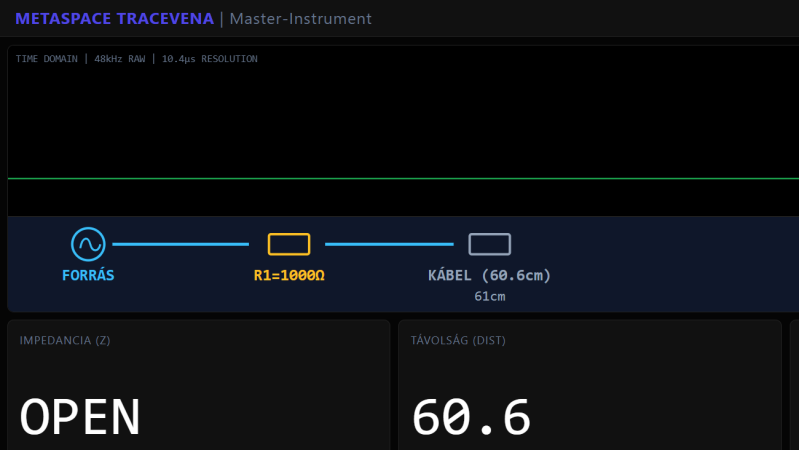
In automotive use, you would connect the low-cost TDR to one end of a wire you suspect is broken. The device then sends the sine wave and measures the phase shift to determine the length of the wire from the measurement point to the break. For example, if the tool reports a length of 30 cm, but you know the wire should be several meters long, you immediately know there is a break at approximately 30 cm from where you connected. This allows you to localize the fault precisely, without having to trace the entire harness. The system works best when the break causes a clean open circuit; high impedance faults may be trickier. Still, for many common automotive wiring issues like broken wires at connectors or chafed cables, this method provides a quick, non-invasive diagnosis.
What Are the Current Limitations and Future Improvements?
As of now, the prototype is still under development. One significant limitation is performance on very short cables (less than a meter), where the phase shift becomes too small to measure accurately. The inventor is working on a new prototype with improved handling for short distances. Additionally, the system requires a clean connection and may struggle with multiple branches in a harness or wires that are heavily loaded with electronics. Future improvements could include software algorithms that compensate for non-ideal conditions, better impedance matching for various cable types, and perhaps integration into a portable handheld device. Despite these limitations, this out-of-the-box thinking demonstrates that effective diagnostics can be achieved on a budget.